
The Market Wall Street Actually Listens To
Equity markets capture the headlines, driven by narratives of innovation and growth. But for a true reading of the economy’s health and Wall Street’s conviction, sophisticated investors turn to the fixed-income market. This multitrillion-dollar universe of debt, from U.S. Treasury bills to corporate bonds, is where capital makes its most sober calculations about risk and reward.
For investors accustomed to the volatility of stocks, the bond market can seem opaque. Its language is different, its risks more subtle. Yet, understanding its core principles is not just an academic exercise; it is fundamental to building a resilient portfolio. At its heart, the analysis of any bond comes down to three critical concepts: duration, credit risk, and yield.
First, What Is a Bond?
In its simplest form, a bond is a loan. When you buy a bond, you are lending money to an entity, whether it’s a government or a corporation. In return for your loan, the issuer promises to pay you periodic interest payments, known as the “coupon,” over a set term. At the end of that term, upon the bond’s “maturity,” the issuer repays your original loan amount, the “principal.”
Unlike owning a stock, which represents a share of ownership in a company, owning a bond makes you a lender. This distinction is the bedrock of fixed income’s role in a portfolio: it is designed to provide stability and predictable income, a counterbalance to the growth-oriented but less certain nature of equities.
The Two Levers of Bond Risk: Duration and Credit
Every bond carries risk, but not the same kind that drives daily stock prices. The two primary risks that determine a bond's value are interest rate risk and credit risk.
Interest Rate Risk and the Concept of Duration
The most important relationship in the bond market is the inverse correlation between interest rates and bond prices. When prevailing interest rates in the market rise, newly issued bonds offer higher coupons. This makes existing bonds with lower coupons less attractive, causing their market price to fall. Conversely, when interest rates fall, existing bonds with higher coupons become more valuable, and their prices rise.
Duration is the metric that quantifies this sensitivity. Often confused with a bond's maturity date, duration is a more nuanced measure of how much a bond's price is likely to change for every 1% change in interest rates. A bond with a duration of 5 years, for example, would be expected to lose approximately 5% of its value if interest rates rise by 1%. The longer the duration, the greater the bond’s sensitivity to rate shifts. This is the primary risk in holding even the safest government bonds.
Credit Risk: The Promise of Repayment
While duration measures sensitivity to market-wide interest rates, credit risk—or default risk—is specific to the bond’s issuer. It is the risk that the borrower will be unable to make its interest payments or repay the principal in full.
This is where credit ratings from agencies like Standard & Poor's and Moody’s become critical. They provide a standardized assessment of an issuer's financial health:
- U.S. Treasury Bonds: Backed by the full faith and credit of the U.S. government, these are considered to have virtually no credit risk and serve as the global benchmark for a “risk-free” asset.
- Investment-Grade Bonds: Issued by financially stable corporations and municipalities. They carry a low to moderate degree of credit risk.
- High-Yield Bonds: Often called “junk bonds,” these are issued by companies with weaker financial standing. They carry a significantly higher credit risk, but they must offer higher yields to compensate investors for that risk.
The Search for Yield: Your Compensation for Risk
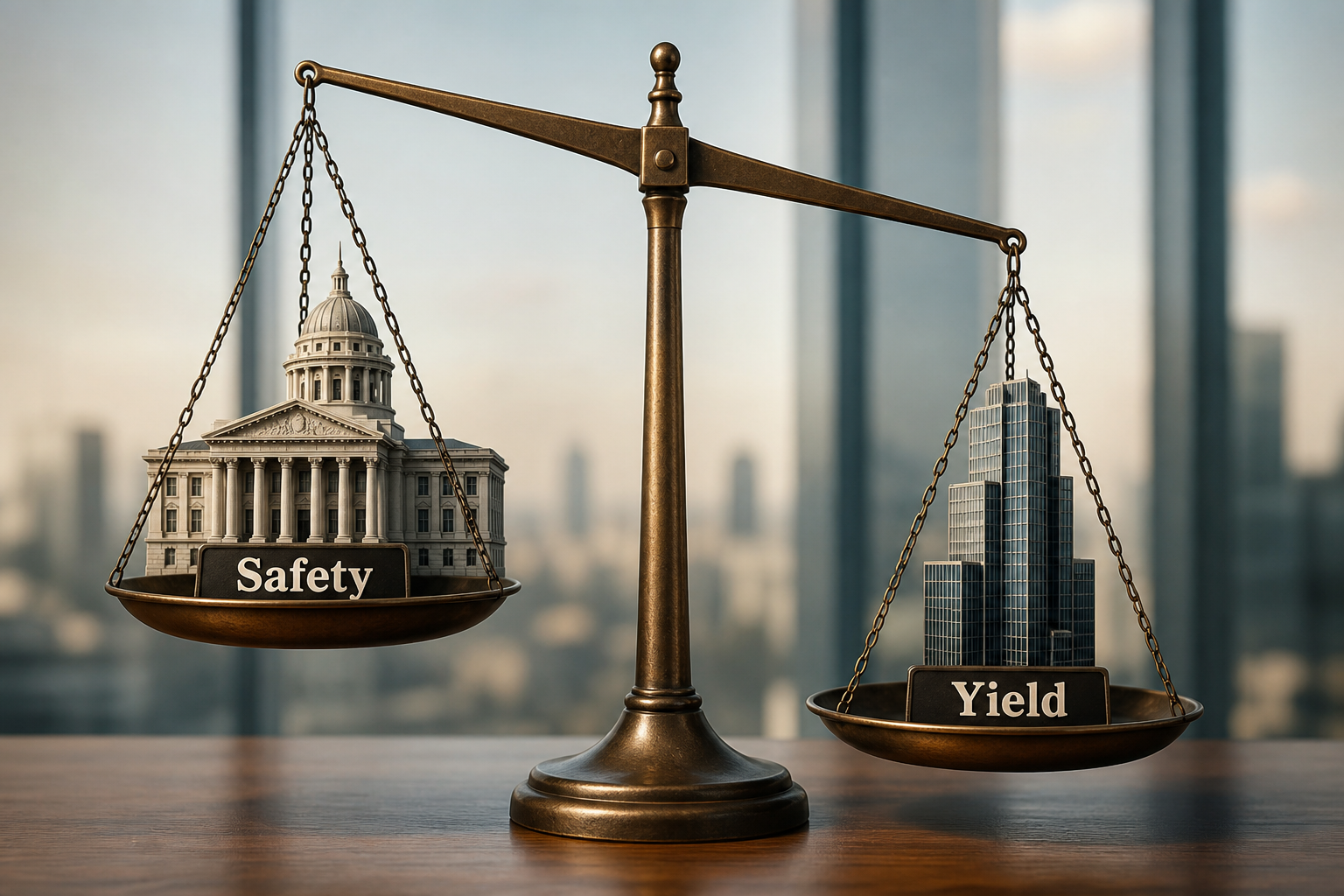
Yield is the ultimate expression of a bond's return, consolidating its price, coupon, and time to maturity into a single figure. More importantly, it is the market’s price for risk. The yield on a bond is the compensation an investor demands for taking on its specific combination of duration and credit risk.
A 30-year U.S. Treasury bond will offer a higher yield than a 2-year Treasury bill because the investor is taking on much more duration risk. Similarly, a high-yield corporate bond will offer a much higher yield than a Treasury bond of the same maturity because the investor is assuming significant credit risk.
For investors, the central question is always the same: Does the yield adequately compensate for the underlying risks? In a low-rate environment, the “search for yield” can push investors toward riskier bonds. In a high-rate environment, investors may be able to achieve their income goals with safer, shorter-duration assets.
The Bottom Line
Analyzing fixed income does not require a complex algorithm. It requires asking the right questions. Before investing in any bond or bond fund, an investor must understand what levers will move its price. How exposed is it to a shift in Federal Reserve policy (duration)? How confident are you in the issuer’s ability to pay its debts (credit risk)? And finally, is the income it provides a fair trade for those risks (yield)? In the quiet, calculated world of the bond market, these are the questions that matter most.
This article is for informational and educational purposes only and should not be considered investment, legal, or tax advice. All investing involves risk, including the possible loss of principal. Consult with a qualified financial professional before making any investment decisions.
