
The Market's Silent Engine
While equity markets capture the headlines with their daily drama, the bond market operates as the global financial system’s silent, powerful engine. It is a world measured not in dramatic price swings, but in basis points and credit spreads. For the serious investor, understanding this world is not optional. It is the bedrock of portfolio construction and risk management. To navigate fixed income, one must master three core concepts: yield, duration, and credit risk. These are the instruments that allow you to measure what you are being paid, what risks you are taking, and how long you are exposed.
Yield: The True Measure of Return
A bond is, at its core, a loan. You lend money to a government or a corporation, and in return, they promise to pay you interest—the coupon—and return your principal at a future date. But the coupon is not the full story. The actual return an investor realizes is the yield.
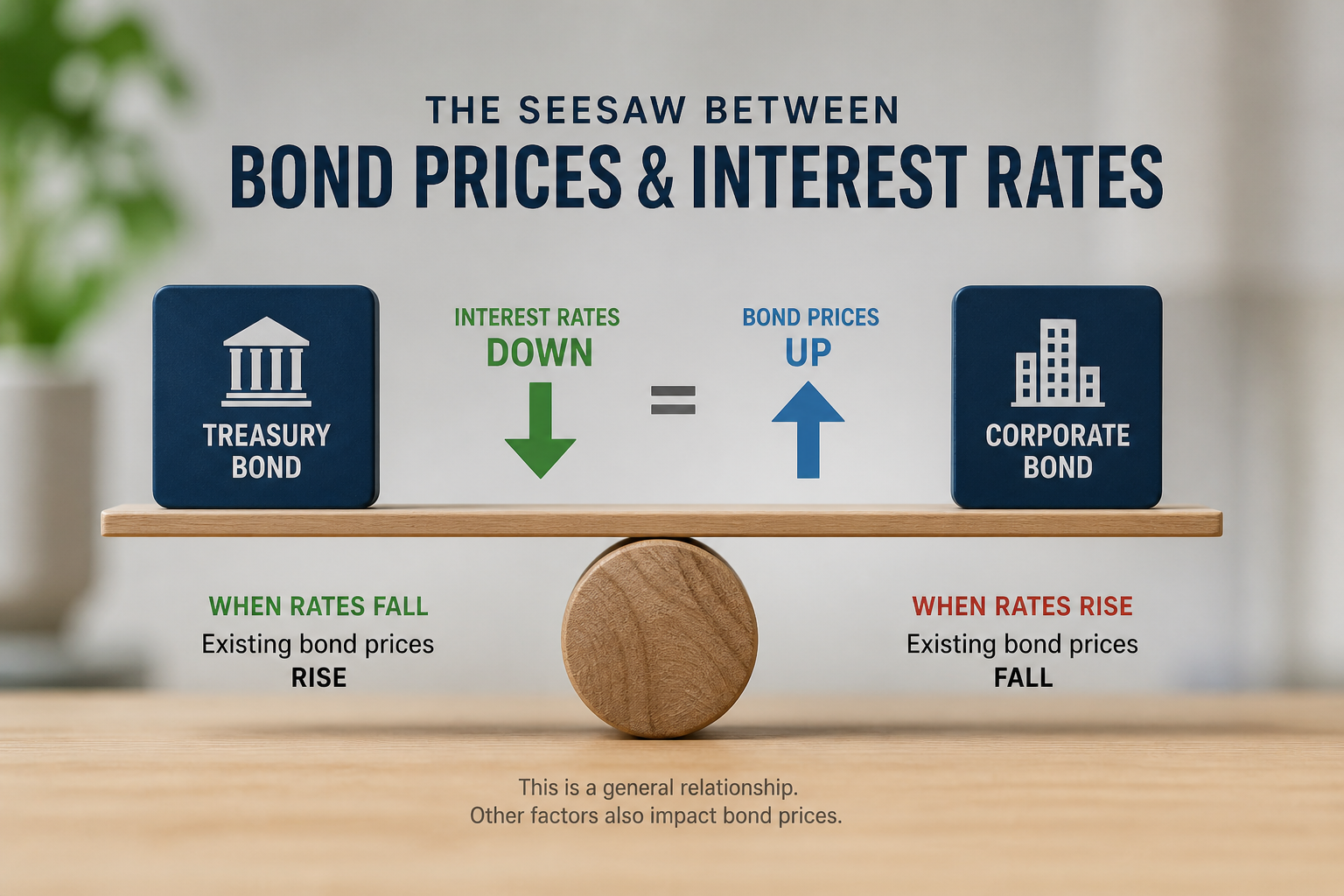
Yield is a function of the price you pay for the bond. This leads to the first and most fundamental rule of the bond market: bond prices and yields move in opposite directions.
- If you buy a $1,000 bond for $950 (at a discount), your yield will be higher than the coupon rate because you are earning the same interest on a smaller initial investment.
- Conversely, if you pay $1,050 for that same bond (at a premium), your yield will be lower than the coupon rate.
Wall Street watches the yield on the 10-year U.S. Treasury note so obsessively because it is the benchmark against which almost every other financial asset is priced. When you hear that "yields are rising," it means existing bond prices are falling. Understanding this inverse relationship is the first step to thinking like a bond investor.
Duration: A Bond's Sensitivity to Interest Rate Changes
If yield tells you what you earn, duration tells you how much risk you are taking from changes in interest rates. It is arguably the most critical and least understood concept for new bond investors. In simple terms, duration measures a bond’s price sensitivity to a 1% change in interest rates.
Think of it as a lever. The longer the duration, the more a bond's price will move when interest rates fluctuate. For example, a bond with a duration of 7 years will likely fall about 7% in price if interest rates rise by 1%, and rise about 7% if rates fall by 1%. This is why investors who owned long-term bonds faced significant principal losses when the Federal Reserve began its aggressive rate-hiking cycle.
While related to a bond's maturity (the date the principal is repaid), duration is a more precise measure of risk. Longer-maturity bonds almost always have a higher duration. The key takeaway is that in a rising-rate environment, shorter-duration bonds offer more price stability. In a falling-rate environment, longer-duration bonds provide greater potential for capital appreciation.
Credit Risk: The Question of Repayment
The final pillar is credit risk, also known as default risk. This is the straightforward risk that the entity that issued the bond—the borrower—will fail to make its interest payments or repay the principal in full. Not all borrowers are created equal.
This is where credit rating agencies like Standard & Poor's and Moody's come in. They assess the financial health of bond issuers and assign them a grade:
- Investment-Grade: These are bonds from the most creditworthy issuers, from U.S. Treasury securities (considered to have virtually zero credit risk) down to corporate bonds rated BBB- or higher.
- High-Yield (or "Junk") Bonds: These are issued by companies with weaker balance sheets and are rated BB+ or lower. To compensate investors for taking on the higher risk of default, these bonds must offer significantly higher yields.
The difference in yield between a U.S. Treasury bond and a corporate bond of the same maturity is called the "credit spread." A widening spread signals that investors are becoming more concerned about defaults and are demanding more compensation for that risk—a classic indicator of economic anxiety.
The Investor's Trade-Off
These three concepts converge on a central trade-off. The search for higher yield inevitably means accepting more of one or both types of risk. To earn more than the baseline offered by a U.S. Treasury bill, an investor must either:
- Extend Duration: Buy longer-term bonds and accept more interest rate risk.
- Take on Credit Risk: Buy bonds from less creditworthy issuers and accept more default risk.
There is no other way. Every strategy in fixed income is a variation on this theme. Understanding this framework moves you from simply buying a bond to making a calculated decision about the risks you are willing to take in exchange for a potential return. It is the discipline that underpins the entire fixed-income market, and it is essential for building a resilient, diversified portfolio.
Disclaimer: This article is for informational and educational purposes only and should not be construed as investment advice. Financial markets involve risk, and investors should consult with a qualified professional before making any financial decisions.
