
The Illusion of Safety in Conventional Credit Structures
As fiduciaries, our primary directive is not the pursuit of maximum return, but the prudent management of risk. In the private credit space, this often leads allocators to focus on seniority in the capital stack or the quality of collateral. While essential, these factors overlook a more fundamental element of risk mitigation: the structure of repayment itself.
Most private debt instruments, from direct loans to syndicated credit, operate on a familiar schedule: monthly or quarterly payments. This structure creates an information vacuum. A borrower’s business can deteriorate significantly in the 30, 60, or 90 days between payments. By the time a covenant is breached or a payment is missed, the lender is reacting to a problem that has already metastasized. The risk profile is binary and abrupt; the asset is either performing or it is in default. This is a blunt instrument for a dynamic economic environment.
Deconstructing the Daily Amortization Engine
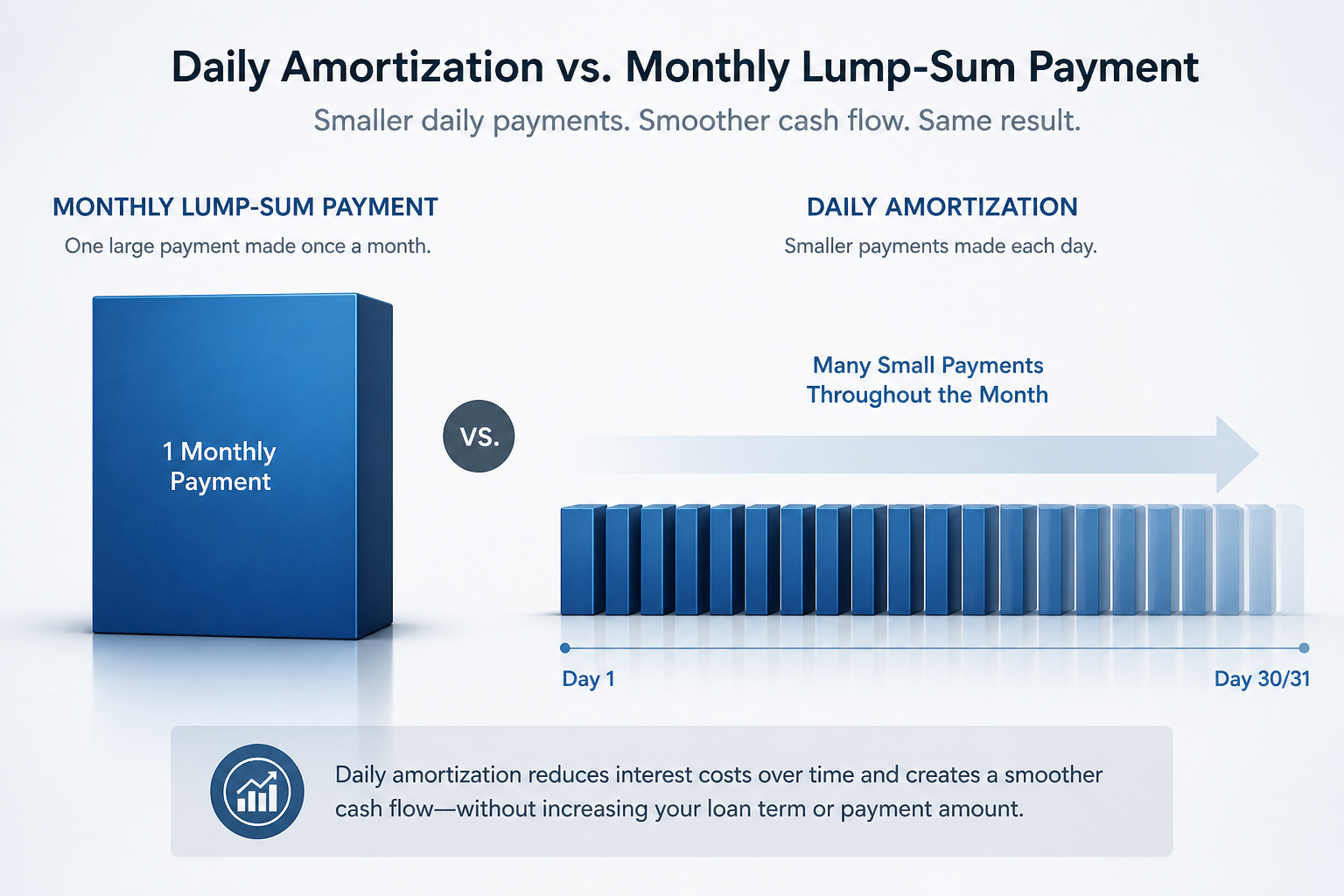
Merchant receivables, an asset class predicated on financing small to medium-sized businesses, offers a compelling structural alternative. Instead of a fixed monthly coupon, repayment is collected as a small, fixed percentage of the merchant’s daily revenue. This is not merely a different payment frequency; it is a fundamentally different risk management framework.
Consider the implications:
- Real-Time Performance Data: The daily remittance acts as a high-frequency, unadulterated signal of the underlying business’s health. There is no waiting for quarterly financials. A decline in revenue is observed immediately, allowing for proactive engagement long before a traditional default scenario would emerge.
- Self-Regulating Repayment: The repayment amount is variable, tied directly to cash flow. If a business experiences a slow week, its repayment obligation automatically decreases, reducing financial strain and the likelihood of a technical default. Conversely, during periods of high revenue, the advance is paid down more rapidly, reducing the lender's outstanding principal at risk.
- Continuous De-Risking: Every single business day, the principal balance is reduced. Unlike a bullet payment or a longer-term amortizing loan, the daily paydown means the lender’s exposure is in a state of constant decline. This rapid amortization is a powerful tool for mitigating loss given default (LGD).
From Structure to Portfolio Resilience
When I evaluate an asset class, I am less interested in its projected yield and more concerned with its correlation to the public market volatility that dominates most client portfolios. The return driver for merchant receivables is not corporate earnings guidance or Federal Reserve policy. It is the granular, day-to-day sales activity of a diverse pool of operating businesses—restaurants, auto repair shops, healthcare practices. This creates a return stream with a structurally low correlation to public equity and debt markets.
The daily repayment mechanism transforms this low correlation into tangible downside protection. It is a built-in shock absorber. The traditional credit model forces a borrower to meet a fixed obligation regardless of fluctuating revenue. The merchant receivables model flexes with the business cycle, creating alignment between the financier and the merchant. This alignment is the core of effective risk management.
Beyond the Coupon: A Fiduciary’s View
The purpose of a portfolio is to preserve and grow wealth through all market environments. Achieving this requires us to look beyond headline numbers and dissect the engines that generate returns. In private credit, the mechanics of repayment are paramount.
The daily amortization structure inherent in merchant receivables is not just a feature; it is a profound strategic advantage. It provides transparency, reduces default probability by design, and constantly de-risks the principal. For advisors seeking to build truly resilient portfolios, evaluating an asset class on the integrity of its structure is not just prudent—it is the fiduciary standard.
This article is for informational purposes only and does not constitute investment, legal, or tax advice. All investment strategies involve risk, including the possible loss of principal. Private investments are illiquid and are not suitable for all investors.
