
Your 'High-Yield' Savings Account Might Be Underperforming
For the first time in over a decade, business owners can earn a respectable return on their excess cash. With high-yield savings accounts and certificates of deposit (CDs) offering rates in the 5% to 7% range, it can feel like a smart, safe move. And compared to the near-zero rates of the recent past, it certainly is.
But for a dynamic business, is “safe” the same as “optimal”? When you factor in inflation and taxes, that 7% return might barely keep your purchasing power level. For capital that could be used for growth, expansion, or strategic opportunities, just keeping pace might not be enough. The opportunity cost of letting cash sit, even in a high-yield account, can be significant.
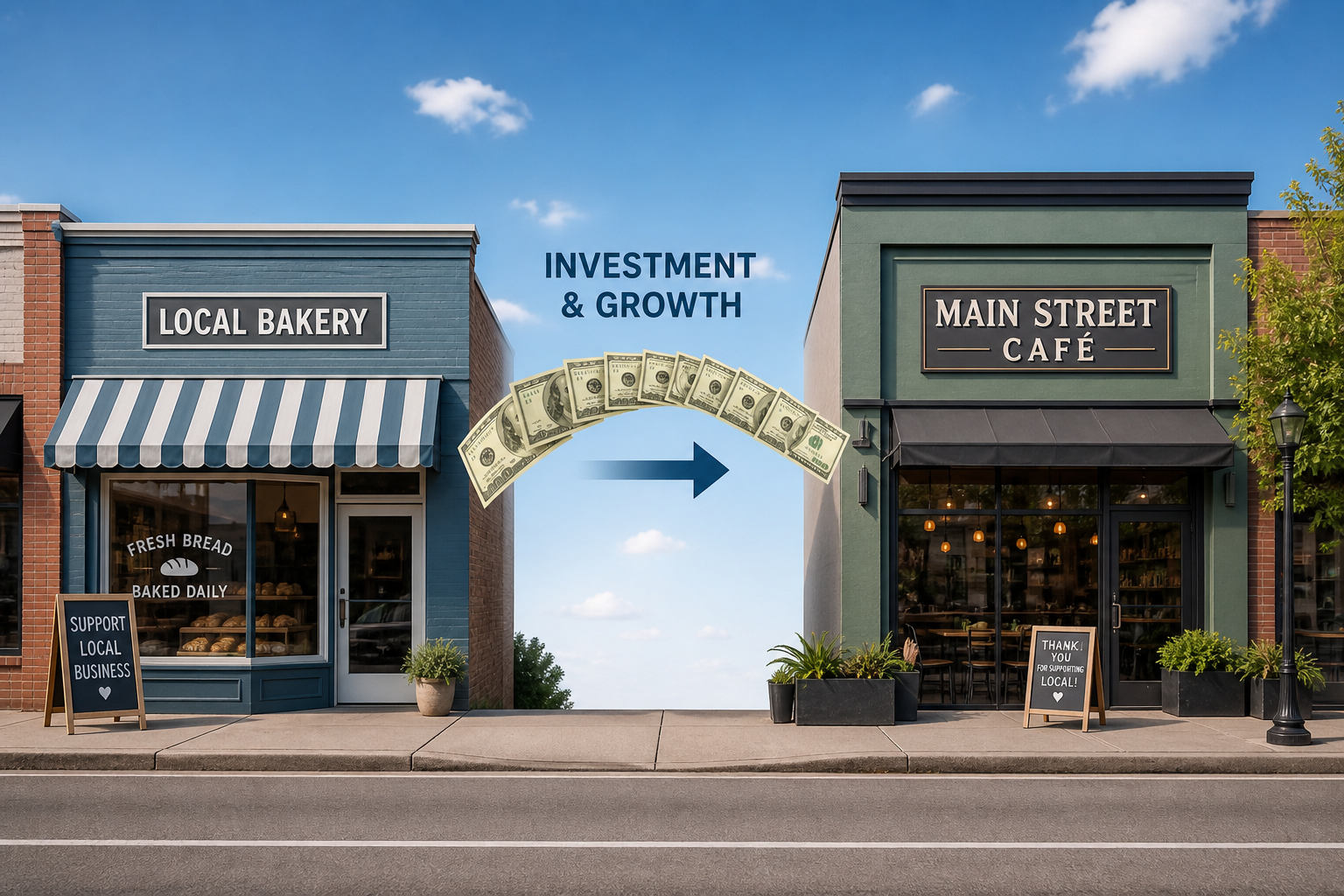
An Alternative Strategy: Reinvesting in Main Street
Instead of parking all your excess cash at a bank, what if you could put it to work directly within the small business economy? One often-overlooked strategy is investing in “Main Street receivables.”
What are receivables? Simply put, they are the unpaid invoices that businesses have for goods delivered or services rendered. A company might have an invoice for $20,000 that’s due in 60 days. While that’s an asset on their books, it’s not cash they can use today to make payroll or buy inventory.
Investing in receivables means you, the investor, purchase that future income stream at a discount. The business gets the cash it needs immediately, and you earn a return when the invoice is paid in full.
How Investing in Receivables Works: A Simple Example
Let's break it down. Imagine a local catering company has a $10,000 invoice from a corporate client, due in 60 days. The caterer needs cash now to fund their next big event.
- The Sale: The catering company decides to sell this invoice to get immediate liquidity. You, as an investor with excess business cash, could buy it for a discounted price, say $9,700.
- The Waiting Period: The 60-day payment term continues as normal.
- The Payout: At the end of the 60 days, the corporate client pays the full $10,000 invoice. That money goes to you as the new owner of the receivable.
In this example, your business invested $9,700 and received $10,000 after two months, for a profit of $300. That’s a 3.1% return in just 60 days. When annualized, that represents a potential return of over 18% [VERIFY]. Of course, this is a simplified example; actual returns vary based on risk, duration, and platform fees.
Understanding the Trade-Offs: Higher Yields vs. Higher Risks
This strategy isn't without risk. It's crucial to understand the balance between potential reward and the diligence required.
Potential Benefits:
- Higher Yields: The primary appeal is the potential for returns that significantly outperform traditional cash-equivalent investments.
- Short Duration: Most invoices are paid within 30 to 90 days, meaning your capital isn't tied up for long periods.
- Supporting Other Businesses: Your investment provides vital working capital to other small and medium-sized enterprises, strengthening the broader business ecosystem.
Real Risks to Consider:
- Credit Risk: This is the most significant risk. The end customer could pay late or, in a worst-case scenario, default on the payment entirely.
- Due Diligence: You can't just buy any invoice. Assessing the creditworthiness of both the business selling the receivable and their customer is critical. Many investors use specialized online platforms that perform this vetting process.
- Lack of Liquidity: Unlike a savings account, you can't withdraw your money on a whim. It is committed until the invoice is paid.
Is This Right for Your Business?
Investing in receivables is not a replacement for a stable, liquid cash reserve to cover daily operations and emergencies. Rather, it can be a strategic use for a portion of your company's excess cash—funds that are sitting idle beyond your foreseeable needs.
By diversifying a sleeve of your capital into well-vetted Main Street receivables, you can potentially put that money to work much harder than it would in a bank account, all while fueling the engine of the real economy.
This article is for informational and educational purposes only and should not be considered investment advice. Investing in private credit and receivables carries significant risks, including the potential loss of principal. Consult with a qualified financial advisor to determine if such strategies are appropriate for your business's specific financial situation and risk tolerance.
