
The High-Achiever’s Portfolio Problem
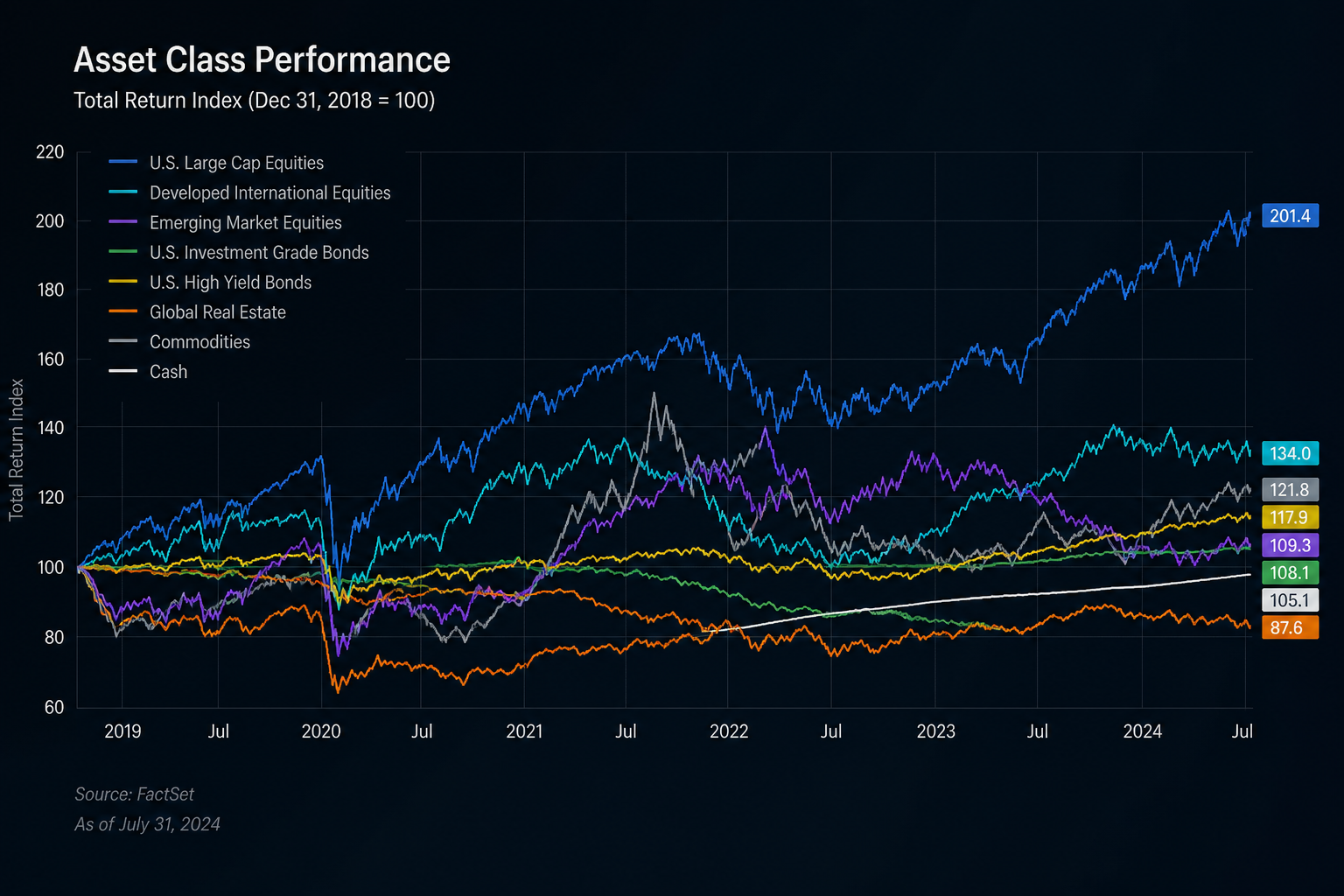
You have spent years, likely more than a decade, mastering a complex professional discipline. Your income reflects this. Yet, for many of us, our investment portfolios are indistinguishable from those of a junior analyst. They consist of a maxed-out 401(k), a collection of ETFs tracking major indices, and perhaps a rental property that demands more attention than it’s worth. The core strategy hinges entirely on the long-term performance of public equities.
This is a concentration risk we would never accept in our professional lives. Tying the vast majority of your net worth to a single economic engine—the public stock market—is an inefficient, and frankly, uninspired way to build durable wealth. The goal is not just to accumulate assets, but to build a resilient portfolio that generates returns from disparate parts of the economy. It needs to work without our constant intervention. This requires moving beyond the standard toolkit and into alternative asset classes. For my portfolio, that meant a significant allocation to private credit.
A Primer on Private Credit
At its core, private credit is simple: it is debt financing provided to companies by non-bank lenders. Investors like us take the place of the bank, lending capital directly to businesses and earning interest in return. This market has expanded significantly since regulatory changes following the 2008 financial crisis made it more difficult for traditional banks to lend to small and medium-sized enterprises. This created a financing gap, and an opportunity for private capital.
While the asset class includes everything from venture debt to multi-million dollar corporate loans, one of the most accessible and structurally interesting areas for individual accredited investors is financing accounts receivable.
The Strategic Case for Accounts Receivable
An account receivable is a business’s outstanding invoice—money it is owed by a customer for goods or services already delivered. For a growing business, waiting 30, 60, or 90 days for that invoice to be paid can create a significant cash flow constraint.
Receivables financing platforms allow investors to solve this problem. Investors can purchase these invoices at a discount to their face value. When the invoice is paid in full by the end customer, the investor receives the full face value, with the difference representing their return. The appeal of this model lies in its fundamental characteristics:
- Short Duration: The investment tenor is tied to the invoice payment term, typically 30-90 days. This drastically reduces exposure to long-term interest rate fluctuations that can impact bond prices.
- Asset-Backed Security: The investment is secured by a specific, legally enforceable obligation for a delivered product or service, not just the general creditworthiness of the borrowing company.
- Low Correlation to Public Markets: Whether an invoice from a manufacturing company to a major retailer gets paid has virtually nothing to do with daily sentiment on the NASDAQ. The performance driver is the financial health of the end customer—a completely different risk factor than equity market volatility.
Advantages for a Professional’s Portfolio
Integrating an asset like this is a strategic decision to build a more robust financial engine. The benefits are clear and address the primary weaknesses of an equity-heavy strategy.
First is genuine diversification. Adding another stock ETF is not diversification; it is layering on more of the same systematic risk. Private credit introduces a return stream that is fundamentally disconnected from public market psychology.
Second is predictable cash flow. These are income-producing assets by design. The returns are not based on capital appreciation but on contractually obligated payments, generating a steady stream of passive income that can be reinvested to accelerate compounding.
Finally, private credit has historically offered an illiquidity premium. Because this capital cannot be withdrawn on a moment's notice like a public stock, investors are typically compensated with higher potential yields than are available in similarly-rated public debt markets. [VERIFY] For a high-income professional who does not need immediate liquidity from their entire investment portfolio, this is a premium worth capturing.
Understanding the Attendant Risks
This is an investment, not a high-yield savings account. The primary risk is credit risk, or the possibility that the end customer defaults on the invoice. Rigorous due diligence on the part of the lending platform is the main mitigant here, but the risk is never zero.
The second factor is illiquidity. This must be understood and embraced. This is capital you are committing for a defined period. For busy professionals, this can be a feature, not a bug—it prevents reactionary decisions during market turmoil. However, it requires careful capital planning. You should only invest funds you are certain you will not need to access before maturity.
Building a Portfolio That Works For You
My career demands my full attention. My portfolio, therefore, must be built to perform without it. A portfolio over-reliant on the S&P 500 requires one to hope for broad market updrafts. A truly diversified portfolio, one that includes non-correlated assets like private credit receivables, is engineered to generate returns across a wider range of economic conditions. It’s the difference between being a passenger in the market and being a deliberate architect of your own wealth.
This article is for informational purposes only and should not be considered investment advice. All investments involve risk, including the possible loss of principal. Private investments are illiquid and not suitable for all investors. You should consult with a qualified financial professional before making any investment decisions.
